The Uniberry founder on what human-centered design, agentic AI and 10 finalist teams reveal about the next challenge for enterprise AI
PUNE, 12 August 2026 — Pratiek Sanklecha has spent his career on both sides of a divide that is about to stop existing.
Two decades in supply chain, distribution and industrial operations came first — the part of the economy where a wrong instruction is not a benchmark score but a wrong shipment, a wrong payment, a wrong commitment, and someone whose name is on it. Then, in 2017, Uniberry Technologies, the enterprise software company he founded and runs. Entrepreneur, technologist, inventor — and a granted patent holder in AI.
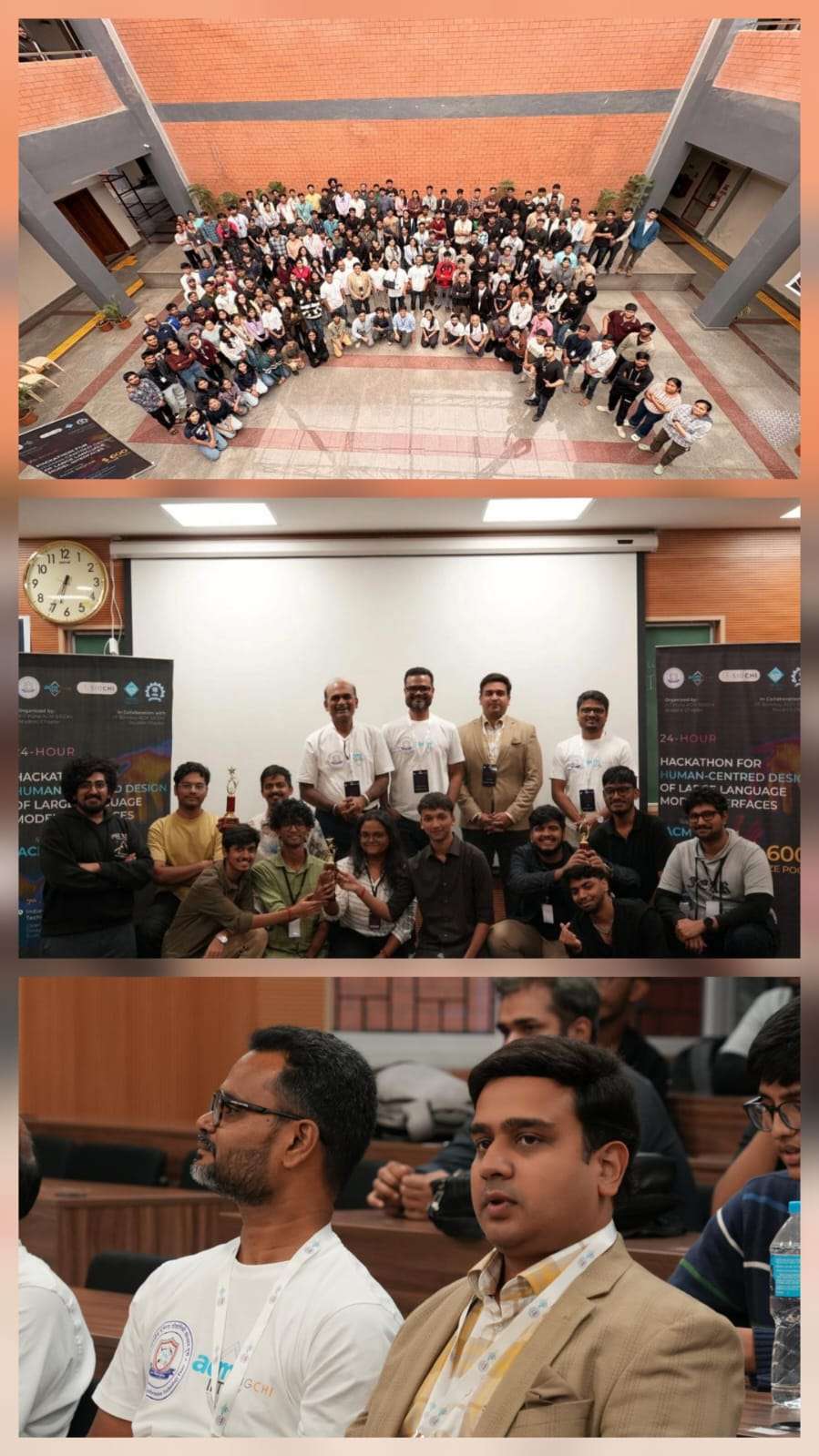
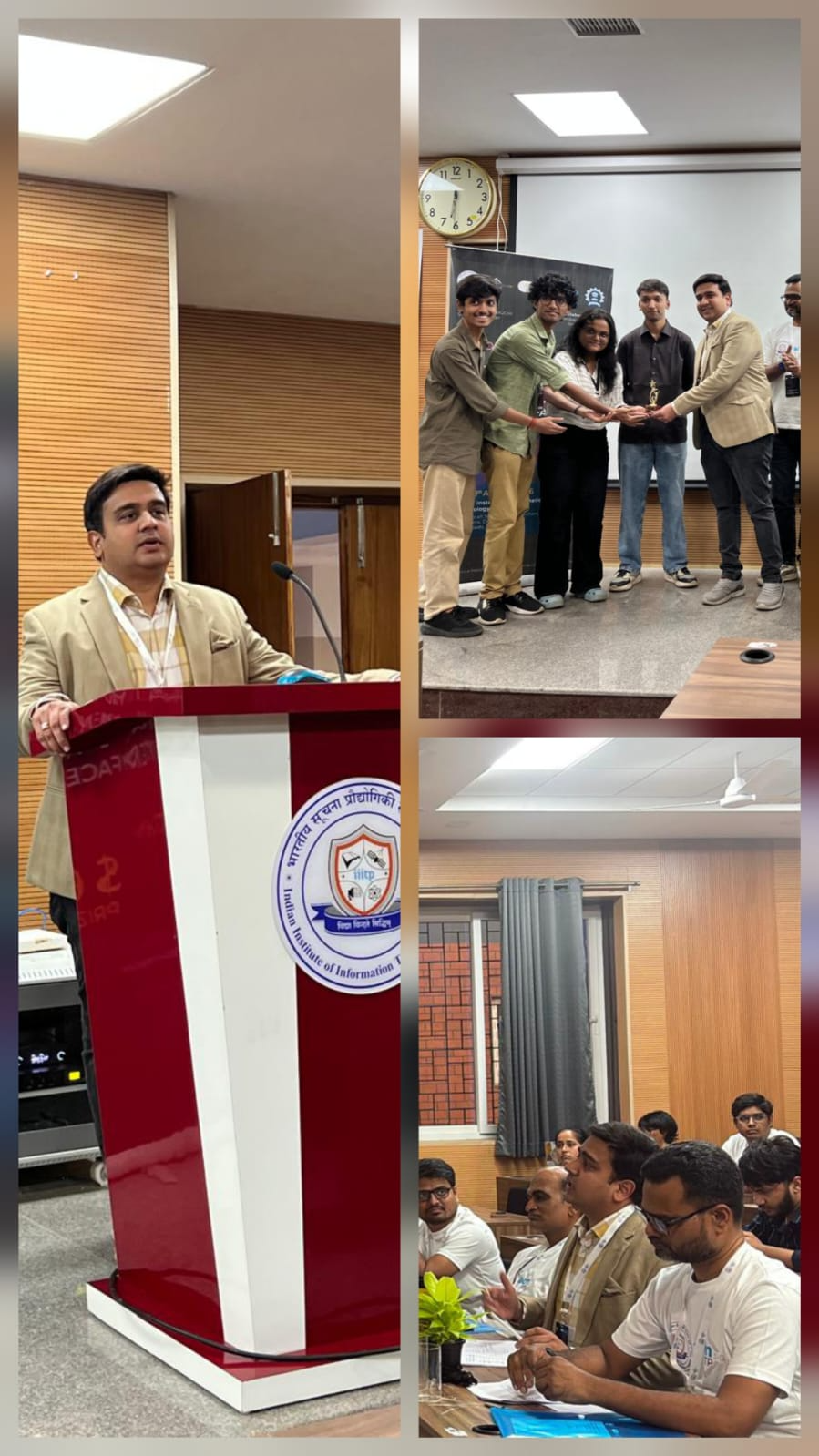
Which is why his seat on the judging panel at the Indian Institute of Information Technology, Pune is worth pausing on. The Human-Centered AI and LLM Hackathon ran across 7 and 8 August, drawing 54 teams from across India, narrowing them to 10 finalists and giving them twenty-four hours to build. On the second day Pratiek judged the finalist innovations and presented the awards — an industry practitioner scoring the work beside academic expertise in human-computer interaction.
He is clear that what he was assessing had almost nothing to do with model performance.
“The model is rarely the hard part. Accountability is.”
The shift he keeps returning to
The change he describes tends to arrive in industry before it arrives in a paper.
“Enterprise systems used to wait to be told. Now they can act, and designing that well is the most interesting problem in the field right now.”
For most of the generative AI cycle the arrangement has been simple. A person asks, a system answers, the person decides. Responsibility stays human. Once software can reason across sources and act rather than reply, the design questions turn into questions of authority: what it may do unprompted, when it should stop and ask, what someone needs to see in order to approve something meaningfully, how it signals that it is not sure.
Those are interface problems. On his reading, they are now governance problems too.
What the briefs revealed
Pratiek thinks the choice of problem statements said as much as the entries did.
One asked teams to visualise how a system reached an answer, so a user could evaluate it rather than accept it — explainability treated as interaction design rather than modelling. Context-Aware Privacy asked for an interface that notices when someone is about to disclose sensitive personal information and intervenes without removing their autonomy.
The one he found most pointed was Negotiating AI Memory: design how a person decides what an AI remembers, forgets, or keeps only for the current conversation — a question currently unresolved at every company shipping an assistant with persistent memory.
The remaining briefs covered e-governance, legal literacy, collaborative prompting and human-centered AI for rural communities.
“The best teams weren't showing off the model. They were designing the relationship between the person and the system. That's a more mature instinct than I expected in twenty-four hours.”
Organisers described the winners as showing strong HCI thinking and thoughtful interaction design. Research judgement and industry judgement had converged.
A room worth being in
A team from TCS Research, Pune won, ahead of Jain University, Bangalore and a home team from IIIT Pune, from a $600 prize pool. The event was organised by the IIIT Pune ACM SIGCHI Student Chapter with the IIT Bombay ACM SIGCHI Student Chapter, supported by the ACM SIGCHI Development Fund, under Sustainable Development Goals 4 and 9.
IIIT Pune, an Institute of National Importance established in 2016, hosted the event. Prof. Vineet Kansal, the institute's Director, backed the initiative throughout, and Dr. Shrikant Salve, Assistant Professor at IIIT Pune, was among those who organised and ran the two days, with the student team of Roshni Sahoo, Saurav Dabhade, Rachana Jambhalikar, Pravin Khillare and Priya Jadhav.
Prof. Anirudha Joshi of the IDC School of Design, IIT Bombay, whose work has shaped human-computer interaction research in India for two decades, presented at the event and spoke on Critical AI.
Between sessions, Pratiek exchanged perspectives on AI innovation, emerging technologies and the future of human-centered computing with Prof. Vineet Kansal, Director, IIIT Pune; Prof. Anirudha Joshi, IDC School of Design, IIT Bombay; Prof. Ganesh Bhutkar, Professor and HCI Researcher, VIT Pune; Dr. Shrikant Salve, Assistant Professor, IIIT Pune; and Mr. Prasanna Kate.
Why he thinks India has the harder problem
Several briefs pointed at conditions he considers underestimated from outside.
An AI interface for government schemes has to work across languages and literacy levels, often for a first-time user, and be candid about what it does not know — because a confident wrong answer about eligibility falls on the person least able to absorb it. Legal literacy, the same. Rural deployment, the same, with connectivity and voice input on top.
Not softer versions of problems being solved elsewhere. In several respects harder — and what solves them tends to travel.
“It’s an incredibly exciting time to be working at the intersection of AI, LLMs and HCI,” he said, “with enormous possibilities ahead for computer science, innovation and India.”
Nobody in that room had finished answering the questions the briefs raised. On his reading, that is precisely why they are worth working on.
Pratiek Sanklecha is founder and CEO of Uniberry Technologies.