
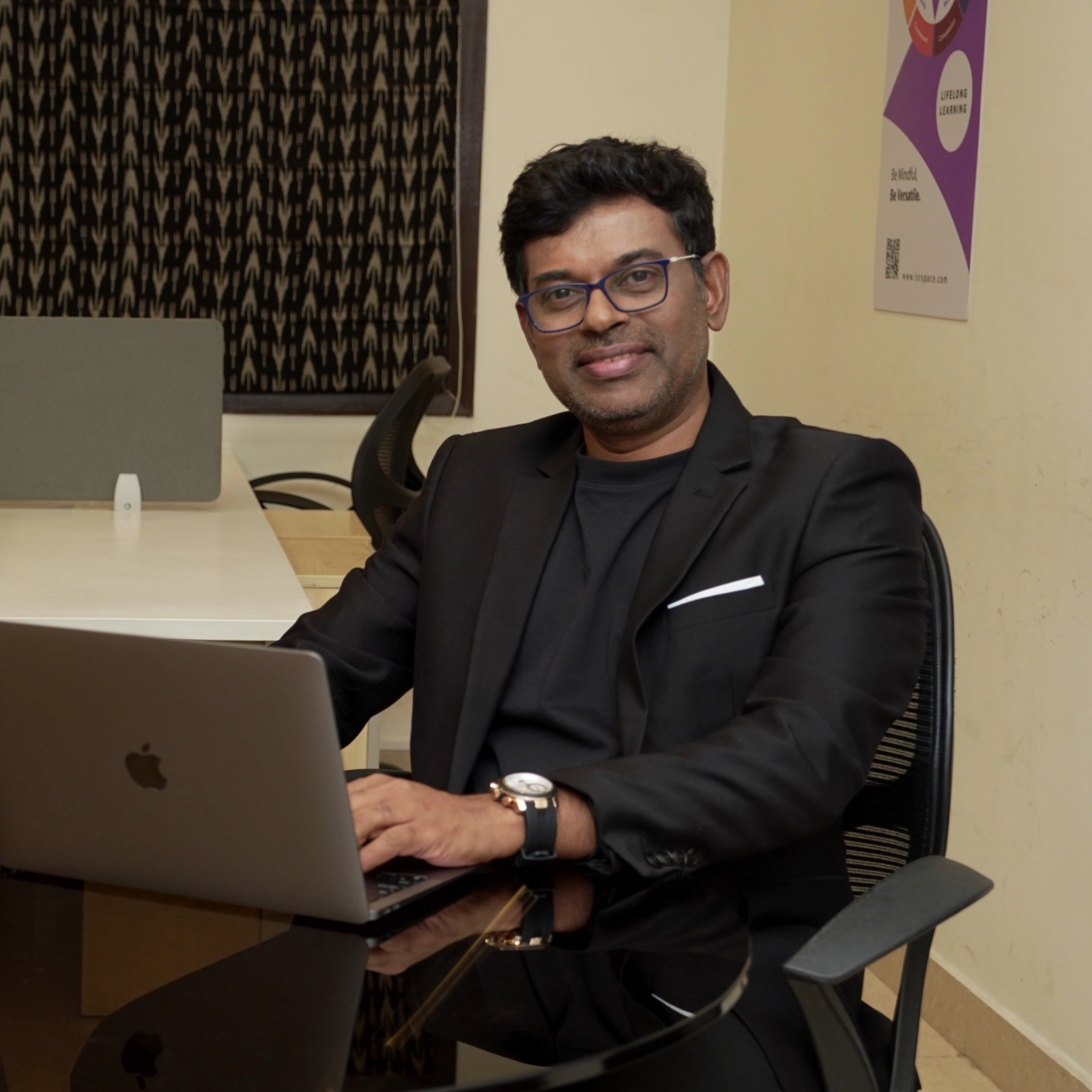
Thiruvananthapuram – An Interview with Shaji Sebastian, Founder & Mentor of International STEAM Research (ISR)
The shifting job market
As automation and AI rewrite the rules of the global economy, what will employment look like for the next generation, and how must education pivot?
Shaji Sebastian: The future of work will be shaped by artificial intelligence, automation, robotics, and emerging technologies. The real challenge for education is not to train students for a fixed list of professions, but to develop their ability to learn, adapt, think critically, collaborate, and create solutions in an uncertain world.
Evaluating India’s educational framework
India’s National Education Policy (NEP) 2020 advocates for major curriculum reforms. How critical is this policy, and where does its execution currently stand?
Shaji Sebastian: NEP 2020 provides a clear direction towards experiential, activity-based, and multidisciplinary learning, but the pace of implementation must accelerate. Students cannot be prepared for the future through memorization alone. They must regularly experience learning through projects, experimentation, and real-world problem-solving, moving experiential learning from an occasional activity to a core part of everyday education.
The power of STEAM
How exactly does blending Science, Technology, Engineering, Arts, and Mathematics bridge the gap between classroom theory and future careers?
Shaji Sebastian: The future will not be divided into isolated subjects. Real-world problems require the integration of science, technology, engineering, mathematics, creativity, and human understanding. STEAM develops the ability to connect these disciplines. It helps students become problem-solvers and creators, capabilities that remain valuable even as specific technologies change.
The ISR learning paradigm
International STEAM Research uses a distinct pedagogical model. What is the core philosophy guiding your approach?
Shaji Sebastian: ISR follows a seven-stage learning philosophy: Encourage. Explore. Engage. Experience. Explain. Evaluate. Elate.
We begin by encouraging curiosity and confidence. Students then explore ideas, engage actively, learn through action, explain their understanding, evaluate outcomes, and ultimately experience the joy of discovery. Learning must lead to capability, not just memorization.
AI in early education
There is significant debate regarding technology and young children. What role should AI play in primary education?
Shaji Sebastian: AI will increasingly become part of daily life. Primary education must focus not just on using AI tools, but on developing curiosity, critical thinking, and ethical understanding. Children should learn to understand technology, not fear it or depend blindly on it. The emphasis should be on age-appropriate exploration and understanding how intelligent systems assist human creativity.
From consumers to creators
Today’s students are heavy tech consumers. How do we shift their mindset toward actual innovation?
Shaji Sebastian: Students must move from using technology to creating with it. Coding, robotics, AI, and IoT allow them to build solutions rather than simply consume digital products.
However, future readiness is not limited to tech. ISR also focuses on entrepreneurship, project management, and the UN Sustainable Development Goals (SDGs). This helps students understand how ideas become viable solutions that address global challenges, turning them into innovators and responsible global citizens.
Redefining failure
Innovation requires trial and error, yet traditional schooling penalizes mistakes. How can schools build a safe space for experimentation?
Shaji Sebastian: Schools must redefine failure. In exams, a wrong answer is a failure; in innovation, a failed experiment is a step toward success. Students must be encouraged to ask: What went wrong? Why? What can I improve? When students are allowed to try again, failure builds resilience, a critical capability for the future workplace.
The 21st-century Indian professional
Given India’s vast young population, what will work life look like for them, and which soft skills will matter most?
Shaji Sebastian: Indian professionals will increasingly work with AI, automation, and global teams. Continuous reskilling will be mandatory. Technical knowledge remains important, but communication, creativity, collaboration, adaptability, and ethical judgment will define success. Our demographic advantage is only meaningful if our youth develop these capabilities.
The mandate for school reform
Why is it no longer viable for academic institutions to maintain the traditional status quo?
Shaji Sebastian: The world has changed, and education must change with it. Schools cannot focus primarily on memorization and exams while the real-world rewards application and adaptability. The goal is not to reduce academic rigor, but to make learning more meaningful, collaborative, and relevant.
The modern teacher’s value
With information readily available online, how does the role of the educator change?
Shaji Sebastian: The teacher’s role is evolving from the sole source of information into a facilitator, mentor, and guide. The greater value lies in helping students ask better questions, evaluate information, and reflect on learning. The teacher remains central, but the role becomes more powerful, not less important.
Navigating the transition
How can school systems manage this massive transformation without causing chaos?
Shaji Sebastian: Change must be managed through collaboration, not sudden disruption. Schools need teacher development, appropriate technology, and curriculum integration. At ISR, we believe transformation should be progressive and practical. The goal is to continuously improve the system, ensuring every child transitions from a consumer of the future into a creator of it.
